
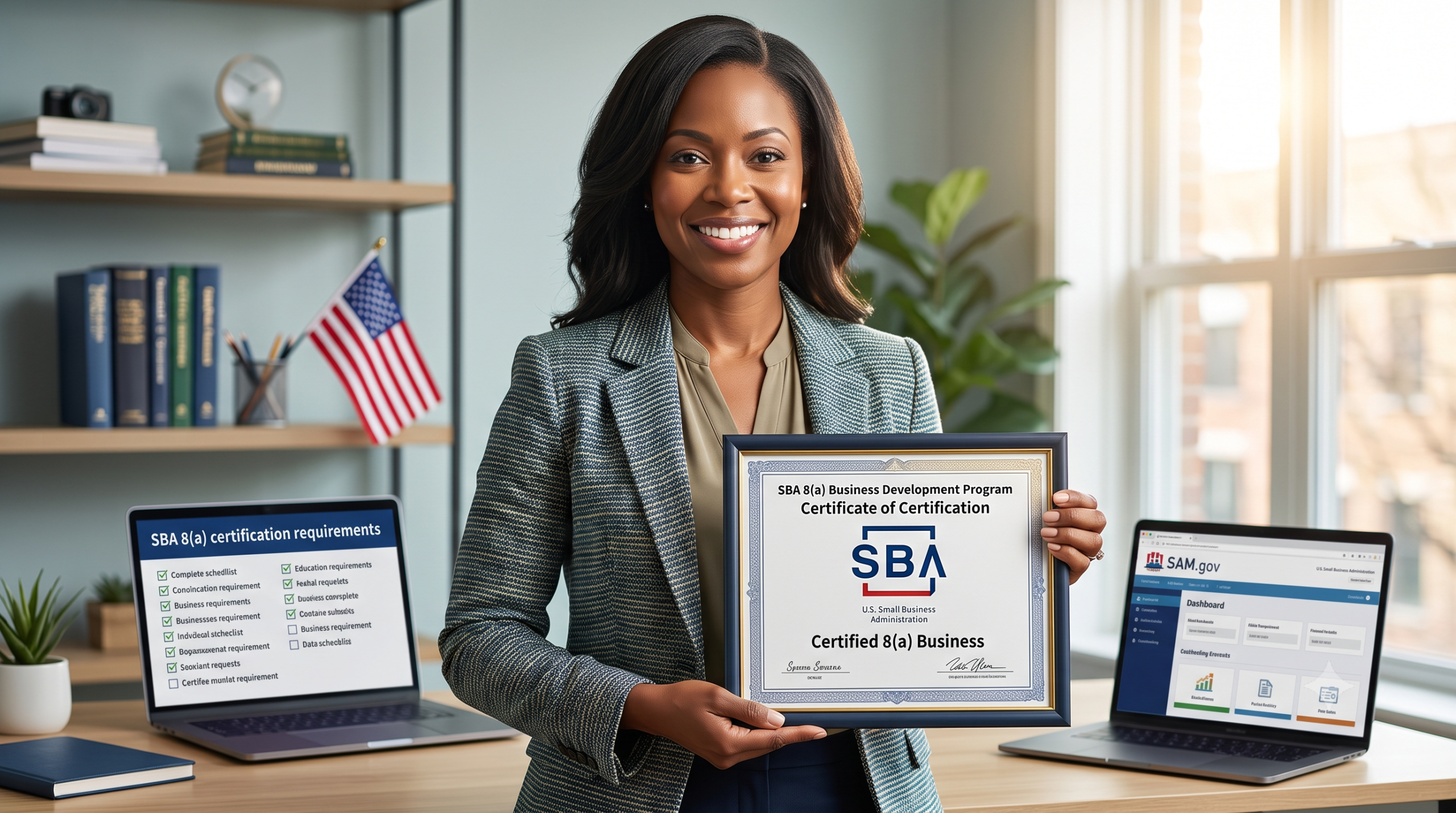
Quick Answer: Learn the 8(a) certification requirements and step-by-step application process. Includes eligibility criteria, common mistakes, and tips to speed up approval.
Imagine securing government contracts worth millions without facing the usual competition—that’s the power of the 8(a) Business Development program. The 8(a) certification requirements can seem daunting, but with the right guide, you can navigate the process and unlock exclusive federal contracting opportunities. This step-by-step application guide will walk you through everything you need to know, from eligibility to submission, ensuring you avoid common mistakes and maximize your chances of approval.
What Is the 8(a) Business Development Program?
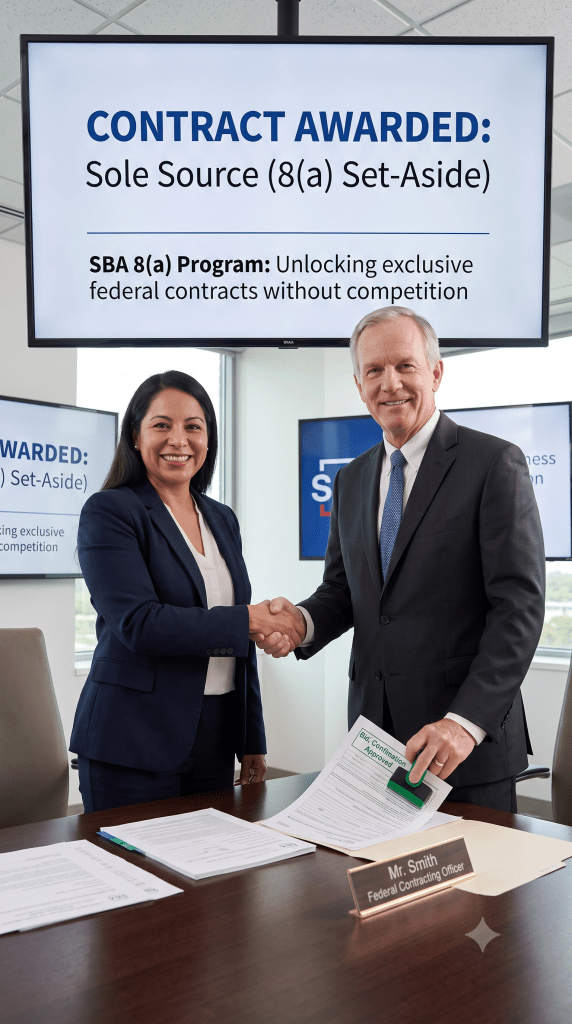
The 8(a) Business Development program is a powerful initiative by the U.S. Small Business Administration (SBA) designed to help socially and economically disadvantaged small business owners compete in the federal marketplace. The program offers a range of benefits, including access to sole-source contracts, mentorship opportunities, and specialized business training. For federal contractors, this program can be a game-changer, providing a direct pathway to lucrative government work without the intense competition of open bidding.
Key statistics highlight the program’s impact: 8(a) firms can receive sole-source contracts up to $7 million for services and $10 million for manufacturing. Additionally, over 20,000 businesses are currently 8(a) certified, with an average annual revenue of $2.5 million from federal contracts. The program is specifically designed for small business owners who are both socially and economically disadvantaged, offering a nine-year development plan that includes business training, counseling, and networking opportunities.
The 8(a) certification process is rigorous but rewarding. It requires careful documentation and a clear demonstration of disadvantage. However, the benefits—such as reduced competition and set-aside contracts—make it well worth the effort. For many small businesses, the 8(a) program has been a catalyst for growth, enabling them to build capacity, win major contracts, and transition into the broader federal marketplace.
8(a) Certification Requirements: Eligibility Criteria
Before you start the 8(a) certification requirements application, you must ensure your business meets the strict eligibility criteria set by the SBA. These requirements are designed to target businesses that are genuinely disadvantaged and in need of federal support. Here are the key criteria you must satisfy:
- Small Business Status: Your business must be a small business as defined by SBA size standards for your primary industry. This is based on either number of employees or average annual receipts, and it varies by NAICS code.
- Ownership and Control: At least 51% of the business must be owned and controlled by a socially and economically disadvantaged individual. This person must also manage day-to-day operations and make long-term decisions.
- Personal Net Worth: The disadvantaged owner’s personal net worth must be under $850,000, excluding certain assets like the primary residence, retirement accounts, and the business itself.
- Adjusted Gross Income: The owner’s average adjusted gross income over the past three years must be under $400,000.
- Total Assets: The owner’s total assets must be under $6.5 million.
These financial thresholds are critical. The SBA uses them to ensure that only truly disadvantaged businesses benefit from the program. For example, if your personal net worth exceeds $850,000, you may be automatically disqualified, even if your business meets other criteria. It’s important to carefully calculate these figures using the SBA’s guidelines to avoid surprises during the application review.
Additionally, the owner must demonstrate social disadvantage through membership in a group that has been subjected to racial or ethnic prejudice or cultural bias. This can include being a member of a designated group (e.g., Black Americans, Hispanic Americans, Native Americans) or providing evidence of individual disadvantage through a personal narrative. Economic disadvantage is typically shown through the financial thresholds above, but you may also need to provide documentation of limited access to capital or credit.
Step-by-Step Guide to Applying for 8(a) Certification
Once you confirm eligibility, the 8(a) certification process involves several clear steps. Follow this guide to ensure a smooth application. The entire process can take 90 to 180 days, so it’s important to be thorough and patient.
Step 1: Register your business in SAM.gov and obtain a UEI number. The System for Award Management (SAM.gov) is the federal government’s primary database for vendors. You must have an active registration and a Unique Entity Identifier (UEI) before applying. This step can take several days, so start early. Ensure your business information is accurate and up-to-date, including your NAICS codes.
Step 2: Gather required documents. You’ll need tax returns for the past three years, financial statements (balance sheet, income statement), personal background information, and a detailed personal narrative of disadvantage. The narrative should explain how you’ve faced social or economic barriers and how the 8(a) program will help your business grow. This is one of the most critical parts of the application—a weak narrative can lead to rejection.
Step 3: Complete the online application via the SBA’s certify.sba.gov portal. The portal guides you through the process, but be prepared to upload all documents in the correct format. Double-check that all fields are filled out correctly. Incomplete applications are a common reason for delays.

Step 4: Submit a detailed personal narrative of disadvantage. This is your chance to tell your story. Describe specific instances of discrimination, limited access to resources, or other barriers you’ve faced. Be honest and specific—the SBA reviews these narratives carefully. Include examples of how your background has affected your business opportunities.
Step 5: Review and submit, then track application status. Before submitting, have a third party review your application for errors. Once submitted, you can track the status via the certify.sba.gov portal. The SBA may request additional information, so respond promptly to avoid delays.
Common Mistakes to Avoid in Your 8(a) Application
Many small business owners fail to meet 8(a) certification requirements due to avoidable mistakes. Here are the most common pitfalls and how to avoid them. By being aware of these issues, you can significantly improve your chances of approval.
Incomplete or inconsistent financial documentation. The SBA requires precise financial records. Ensure your tax returns, financial statements, and personal net worth calculations align. Any discrepancies can trigger a request for additional information or outright rejection. For example, if your tax return shows income that contradicts your personal net worth statement, the SBA will question your eligibility.
Weak or vague personal disadvantage narrative. The narrative is your opportunity to demonstrate social disadvantage. Avoid generic statements like “I faced discrimination.” Instead, provide specific examples: “In 2018, I was denied a business loan despite having strong credit, and the bank manager made comments about my ethnicity.” The more detailed and personal your story, the stronger your application.
Missing SAM.gov registration or incorrect NAICS codes. Your SAM.gov registration must be active and include the correct NAICS codes for your business. If your codes don’t match your primary industry, the SBA may consider your application incomplete. Double-check that your UEI number is correct and that your registration hasn’t expired.
Not demonstrating sufficient control and management by the disadvantaged owner. The SBA requires that the disadvantaged owner controls the business’s day-to-day operations and long-term decisions. If you have partners or investors who exert influence, this can be a red flag. Ensure your organizational structure clearly shows the disadvantaged owner’s control.
How Long Does 8(a) Certification Take?
One of the most common questions about the SBA 8(a) application steps is the timeline. The typical processing time for an 8(a) certification is 90 to 180 days. However, this can vary based on several factors. Understanding these factors can help you set realistic expectations and plan accordingly.
Factors affecting the timeline include the completeness of your application, the SBA’s current workload, and any follow-up requests for additional information. Incomplete applications are the number one cause of delays. The SBA may also conduct a site visit or interview, which can add time. During peak periods (e.g., end of the fiscal year), processing may slow down due to high volume.
To expedite your application, double-check all documents before submission. Ensure your SAM.gov registration is active and your NAICS codes are correct. Respond promptly to any SBA inquiries—delays in your response can stretch the process to six months or more. Some businesses have reported approval in as little as 60 days with a flawless application, but this is rare.
If your application is rejected, don’t despair. You can reapply after addressing the issues. Many successful 8(a) firms were approved on their second attempt. Use the rejection feedback to strengthen your documentation and narrative.
Achieving 8(a) Certification: Your Next Steps
Achieving 8(a) certification opens doors to lucrative federal contracts and business development support, but the application requires careful preparation. Follow the steps above, avoid common pitfalls, and you’ll be on your way to leveraging the program’s full benefits. The 8(a) certification requirements are strict, but the rewards—including sole-source contracts up to $10 million—are well worth the effort.
Remember, the 8(a) program is not just about contracts; it’s about building a sustainable business. The program offers mentorship from established firms, business training, and networking opportunities that can help you scale your operations. For federal contractors, this certification can be a springboard to long-term success in the government marketplace.
If you’re ready to take the next step, start by registering in SAM.gov and gathering your financial documents. The process may seem complex, but with persistence and attention to detail, you can navigate it successfully. For more guidance, check out our resources on and .
Apply Now for 8(a) Certification
Key Facts About 8(a) Certification Requirements
- The SBA 8(a) program offers sole-source contracts up to $7 million for services and $10 million for manufacturing.
- HUBZone certified firms receive a 10% price evaluation preference in full and open competition.
- Over 20,000 businesses are currently 8(a) certified, with an average annual revenue of $2.5 million from federal contracts.
- WOSB program contracts are limited to industries where women are underrepresented, covering over 200 NAICS codes.
- SDVOSB certification requires a service-connected disability rating of at least 10% from the VA.
- SBA 8(a) certification requirements
- HUBZone eligibility map
- WOSB certification process
Frequently Asked Questions
How long does 8(a) certification take?
The typical processing time is 90 to 180 days, but it can be shorter if your application is complete and you respond quickly to SBA requests.
What is the revenue limit for SBA certifications?
For the 8(a) program, the disadvantaged owner’s average adjusted gross income must be under $400,000 over three years, and personal net worth under $850,000.
Can a business have both 8(a) and HUBZone certification?
Yes, a business can hold multiple SBA certifications, including 8(a) and HUBZone, as long as it meets the eligibility requirements for each program.
What documents are required for 8(a) certification?
You need tax returns for three years, financial statements, personal background information, a personal narrative of disadvantage, and proof of SAM.gov registration.
Can I reapply if my 8(a) application is rejected?
Yes, you can reapply after addressing the issues identified by the SBA. Many businesses are approved on their second attempt.
Key Facts About 8(a) certification requirements
- The SBA 8(a) program offers sole-source contracts up to $7 million for services and $10 million for manufacturing.
- HUBZone certified firms receive a 10% price evaluation preference in full and open competition.
- Over 20,000 businesses are currently 8(a) certified, with an average annual revenue of $2.5 million from federal contracts.
- WOSB program contracts are limited to industries where women are underrepresented, covering over 200 NAICS codes.
- SDVOSB certification requires a service-connected disability rating of at least 10% from the VA.
- SBA 8(a) certification requirements
- HUBZone eligibility map
- WOSB certification process

Leave a Reply