

Quick Answer
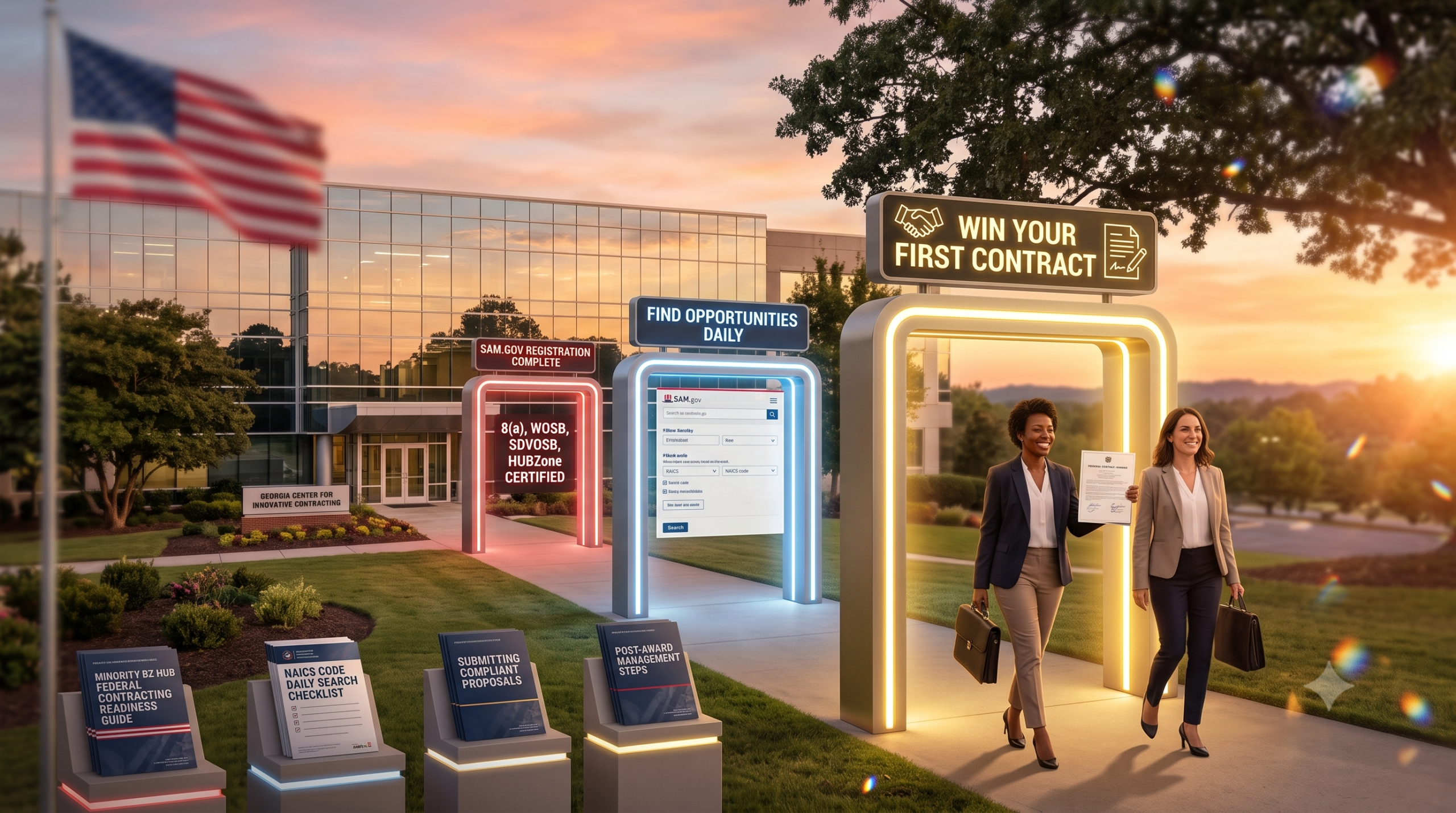
Small business federal contracting approval doesn’t end at certification — it ends when you win your first contract. To find federal contract opportunities, search SAM.gov’s contract opportunities database daily using your NAICS codes, then win government contracts for small business by submitting a compliant, competitively priced proposal that directly answers the solicitation’s requirements. Certification opens the door; a strong proposal is what actually completes small business federal contracting approval in practice.
Why Certification Alone Won’t Complete Small Business Federal Contracting Approval
Plenty of small businesses finish SAM.gov registration, earn an 8(a), WOSB, SDVOSB, or HUBZone certification, and then stall — waiting for contracts to simply appear. That’s not how small business federal contracting approval works in practice. Certification proves you’re eligible to compete; it doesn’t put a contract in your hands. The businesses that actually win federal work are the ones actively searching for opportunities, reading solicitations closely, and submitting proposals — not the ones sitting on a certification and hoping to get discovered.
This is the stage where small business federal contracting approval becomes a sales and operations discipline, not a paperwork exercise. If you haven’t finished your certifications yet, review our guides to SAM.gov registration, 8(a) certification, and WOSB, SDVOSB, and HUBZone set-asides before moving on to this stage.
How to Find Federal Contract Opportunities for Small Business
Learning how to find federal contract opportunities is the first real skill in winning federal work, and it starts in the same place your registration lives:
- SAM.gov Contract Opportunities. The federal government’s official database of open solicitations, searchable by NAICS code, agency, set-aside type, and keyword — the single best free tool to find federal contract opportunities daily.
- Agency forecast lists. Many federal agencies publish upcoming procurement forecasts months in advance, giving you time to prepare before a solicitation officially posts.
- Subcontracting opportunities. Prime contractors are often required to subcontract a portion of large awards to small businesses, making prime contractor relationships another way to find federal contract opportunities beyond direct bids.
- Agency small business offices. Every major federal agency has a small business liaison whose job is to help certified businesses like yours find federal contract opportunities that match your capabilities.
Set aside dedicated time each week to search using your NAICS codes and relevant set-aside filters — the businesses that treat this as a routine, not a one-time event, are the ones that consistently win government contracts for small business.
Reading a Solicitation: What Small Business Federal Contracting Approval Requires Before You Bid
Once you find federal contract opportunities worth pursuing, the solicitation document itself tells you exactly what’s required to win. Before drafting anything, confirm:
- The set-aside type — make sure the solicitation matches your certification (8(a), WOSB, SDVOSB, HUBZone, or full and open).
- Submission deadline and format requirements — federal solicitations are strict about page limits, formatting, and delivery method.
- Evaluation criteria — most solicitations weight technical approach, past performance, and price differently; understanding this weighting shapes how you build your proposal.
- Required certifications and representations — many solicitations require specific SAM.gov representations to be current and accurate.

How to Win Government Contracts for Small Business With a Competitive Proposal
Once you understand the solicitation, the proposal itself is where small business federal contracting approval turns into an actual award. To win government contracts for small business, your proposal needs to:
- Address every requirement explicitly. Federal evaluators score against a checklist — skipping a requirement, even a minor one, can disqualify an otherwise strong proposal.
- Demonstrate relevant past performance. If this is your first federal bid, highlight comparable commercial work that maps directly to the solicitation’s scope.
- Price competitively without underbidding. Contracting officers are wary of unrealistically low bids, since they raise concerns about your ability to deliver.
- Follow formatting instructions exactly. Proposals that exceed page limits or ignore formatting instructions are frequently rejected before technical evaluation even begins.
- Submit early. Technical issues near a deadline are common; submitting a day early protects you from losing a bid to a late upload.
Every proposal you submit — win or lose — builds documentation and experience that strengthens your next attempt to win government contracts for small business.
Common Mistakes That Sink Small Business Federal Contracting Approval Bids
- Bidding on mismatched opportunities. Chasing every posted solicitation instead of targeting ones that fit your certifications and capabilities wastes time and hurts your win rate.
- Ignoring the evaluation criteria. Proposals written to impress rather than to score against stated criteria consistently lose to less polished but more compliant competitors.
- Waiting for opportunities to find you. Passive searching is the single biggest reason certified businesses fail to find federal contract opportunities that match their capabilities.
- Underestimating post-award requirements. Winning is only the beginning; contract performance, reporting, and compliance start immediately after award.
What Happens After Award: Post-Award Steps for Small Business Federal Contracting Approval
Winning your first contract doesn’t end the small business federal contracting approval process — it starts a new phase. After award, be prepared to:
- Confirm your SAM.gov registration and CAGE code remain active throughout the period of performance.
- Establish compliant invoicing and reporting processes, particularly if the contract requires DCAA-compliant accounting.
- Deliver on schedule to build the past performance record that will help you win government contracts for small business again.
- Track option year exercises and renewal deadlines closely, since many federal contracts include multi-year option periods.
Your Next Step Toward Small Business Federal Contracting Approval
Finding opportunities, writing competitive proposals, and managing post-award requirements are the skills that turn certification into revenue. Most businesses don’t struggle with small business federal contracting approval because they’re unqualified — they struggle because no one showed them how to search, bid, and perform once the certification paperwork is done.
If you’d rather have expert guidance instead of learning this stage through trial and error, MinorityBZHub’s free federal contracting readiness assessment will help you identify live opportunities and build a proposal strategy suited to your business.
Frequently Asked Questions About Winning Federal Contracts for Small Business
Where is the best place to find federal contract opportunities?
SAM.gov’s Contract Opportunities database is the official, free source most businesses use to find federal contract opportunities, searchable by NAICS code, agency, and set-aside type.
How do I win government contracts for small business with no past federal experience?
Highlight comparable commercial past performance, start with smaller or simplified acquisitions, and consider subcontracting under a prime contractor to build a federal track record.
What’s the biggest reason small business federal contracting approval bids get rejected?
Failing to address every requirement in the solicitation, or exceeding formatting and page limits, are the most common reasons technically capable proposals get eliminated before evaluation.
Do I need a proposal writer to win my first federal contract?
Not necessarily, but professional federal proposal writing for small business support can significantly improve compliance and scoring on your first few submissions while you build internal expertise.
What happens if I win a contract but my SAM.gov registration lapses afterward?
An expired SAM.gov registration during an active contract can jeopardize payments and future option year exercises, so renewal must remain current throughout the entire period of performance.

Leave a Reply